


A Guide to Driveway Gate Sizing for Your Property

A gate that looks right but is too narrow creates a daily problem every time a vehicle enters the property. This guide to driveway gate sizing helps homeowners, property managers, and business owners choose an opening that supports real vehicle access, security needs, and the layout of the site - without paying for more gate than the property requires.
The best size is rarely based on appearance alone. A compact residential driveway has different needs than an acreage entrance, warehouse yard, dog run, or service lane. The right answer comes from measuring the usable opening, considering the vehicles that use it, and selecting a gate style that has enough room to operate safely.
Start With the Clear Driveway Opening
Driveway gate sizing begins with the clear opening: the unobstructed space between posts when the gate is fully open. This is the dimension vehicles must pass through. It is not simply the width of the paved driveway, especially where fence lines, retaining walls, landscaping, curbs, or gate hardware reduce usable space.
Measure at the narrowest point where a vehicle will travel. If the driveway curves, slopes, or meets the road at an angle, take that into account. A vehicle may need extra turning room even when the straight-line driveway width appears adequate.
For a swing gate, the opening is the distance between the hinge posts. For a sliding gate, it is the space left clear when the gate is in its open position. A contractor should also confirm post placement and the room needed for latches, hinges, operators, and safety equipment before fabrication begins.
Common Driveway Gate Widths
There is no single standard width that fits every property, but these ranges provide a practical starting point:
10 to 12 feet often works for a standard passenger vehicle on a straight residential driveway with limited traffic.
14 to 16 feet offers more comfortable access for pickup trucks, SUVs, moving vehicles, service providers, and driveways that require a turn at the entrance.
18 to 20 feet is often appropriate for acreages, shared driveways, commercial properties, and sites expecting trailers, delivery vehicles, or regular equipment access.
24 feet or wider may be needed for industrial yards, warehouses, schools, large equipment, or two-way vehicle movement.
A wider opening is generally more forgiving, but it also affects cost, gate weight, post requirements, and the space needed for the gate to swing or slide. The goal is not to install the largest possible gate. It is to create enough clearance for routine use without turning every arrival into a tight maneuver.
Size for the Largest Vehicle, Not the Smallest One
A family sedan may pass comfortably through a 10-foot opening, but that does not mean the gate is sized properly for the property. Think about every vehicle that needs access during a typical year: garbage collection, snow removal, landscaping crews, contractors, delivery trucks, emergency vehicles, trailers, and recreational equipment.
For a home with occasional trades or delivery vehicles, a 14- to 16-foot opening may prevent inconvenient access issues. For an acreage with trailers or machinery, planning around the widest and longest expected vehicle is usually the better investment. Commercial properties should also consider how often trucks enter, whether vehicles must turn inside the gate, and whether the entrance is used during busy operating hours.
If you manage a business site, ask drivers how they approach the property. An entrance that works from one direction may be difficult from another. This is especially true for corner lots, narrow access roads, and driveways with a sharp turn immediately inside the gate.
Choose a Gate Height That Matches the Fence and Purpose
Width controls access, while height shapes security, privacy, and curb appeal. A driveway gate should usually align with the surrounding fence height so the perimeter looks intentional and performs consistently.
A 4-foot gate can define a property line and help control access without making the entrance feel closed in. A 5- or 6-foot gate is a common choice for residential security and privacy, particularly when paired with vinyl, wood, ornamental iron, or chain link fencing with privacy slats. Taller gates may be suitable for commercial yards, industrial sites, equipment storage areas, and properties where perimeter control is a priority.
Height also has practical limits. Taller gates catch more wind, weigh more, and need properly sized posts, hinges, and bracing. In exposed locations, a solid privacy gate can place significantly more pressure on the structure than an open chain link or ornamental design. A professional installer can recommend a material and frame design that fits the desired height without sacrificing long-term performance.
Swing, Sliding, and Double Gates Need Different Space
The gate style can change the right size and layout for the entrance. A single swing gate is often practical for narrower openings, but it needs clear space behind the gate to swing fully. If the driveway slopes upward toward the entrance, a standard swing gate may scrape the ground or require a different design.
Double swing gates split the opening into two leaves. This can reduce the width and weight of each leaf, which is useful on wider residential and commercial entrances. They still need a level, clear swing area, and the center latch point must be secure enough for regular use.
Sliding gates are a strong option where a swinging gate would block the driveway, interfere with a slope, or create a hazard near the road. However, the property needs enough room along the fence line for the gate to slide open. Cantilever gates also require additional runback space because part of the gate extends beyond the clear opening for support.
Before choosing an automatic operator, verify that the gate style, weight, opening direction, and available space all work together. Automation should be designed around a properly sized gate, not used to compensate for a poor layout.
Account for Posts, Hardware, and Setbacks
The visible gate is only part of the project. Strong terminal posts and properly installed footings are essential, especially for wide, tall, or automated gates. Heavy gates place constant load on hinges and posts, while sliding gates depend on accurate alignment and stable support.
Keep the gate far enough back from the street that a vehicle can pull in and wait without blocking traffic. This is particularly valuable on busy roads, at commercial entrances, and where a keypad or access-control system is planned. Local requirements, utility locations, sightlines, and site-specific conditions may also affect post placement and gate location.
In areas with deep frost conditions, installation details matter. Footing depth, drainage, and ground stability can affect how well a gate stays aligned over time. Saving money with undersized posts or shallow footings can lead to sagging, dragging, and difficult operation later.
Material Choice Affects Practical Gate Size
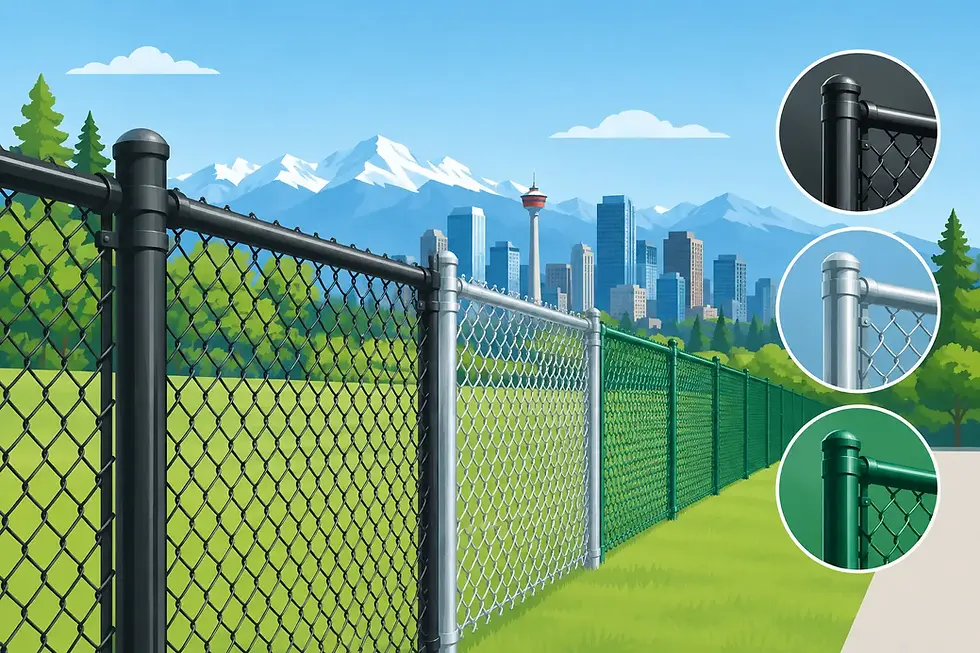
Chain link gates are a cost-effective option for many residential, commercial, and industrial properties. They provide reliable access control, can be built for a wide range of openings, and can be fitted with privacy slats where more screening is needed. Their open design also reduces wind load compared with a fully solid gate.
Vinyl, wood, and PVC gates can provide privacy and a more enclosed look, but they need sufficient framing because solid panels add weight and catch wind. Ornamental iron gates offer a durable, upscale appearance and work well where visibility and security are both important. The best material depends on the desired look, traffic level, exposure, maintenance expectations, and budget.
For larger openings, a custom-built gate frame is often the better choice. It allows the contractor to match the gate to the fence system while using the right rails, bracing, posts, and hardware for the actual span.
Get a Site-Specific Gate Measurement Before Ordering
Online measurements and standard gate sizes are useful for early planning, but they are not a substitute for an on-site assessment. A professional measurement can identify grade changes, limited swing clearance, poor approach angles, drainage concerns, and other issues that are easy to miss from a rough sketch.
Vallarta Fence Calgary can help property owners compare chain link, vinyl, wood, ornamental iron, and custom gate options based on the entrance, traffic needs, and budget. A clear estimate should account for materials, labor, posts, hardware, and installation so there are no surprises once work begins.
A driveway gate should make entering your property easier, not create another obstacle to manage. Measure for the vehicles you actually expect, leave room for safe operation, and choose a structure built to handle the job for years.


Comments