


A School Perimeter Fence Example That Works

A good school perimeter fence example does more than draw a line around the property. It guides visitors to the right entrance, helps staff manage access during the school day, protects play areas, and gives the campus a clean, organized appearance. The best design is not necessarily the tallest or most expensive option. It is the one that fits the site, the age of students, daily traffic patterns, and the school’s budget.
For most schools, chain link fencing provides the most practical starting point. It is cost-effective, durable, easy to repair, and available in layouts that can secure a large property without blocking visibility. With the right gates, heights, privacy features, and installation details, a chain link perimeter can serve a school well for years.
A Practical School Perimeter Fence Example
Consider a typical elementary or middle school with a building near the front of the lot, parking at one side, sports fields behind the building, and a playground beside the school. The goal is to create a defined perimeter while keeping arrival, dismissal, maintenance, emergency access, and after-hours field use manageable.
A practical layout could use a 6-foot commercial-grade chain link fence around the main property line. The front of the school may use black vinyl-coated chain link or ornamental iron fencing where appearance matters most, while standard galvanized chain link can be used along rear and side boundaries to control costs. This approach gives the public-facing area a more finished look without overspending on materials where visibility is limited.
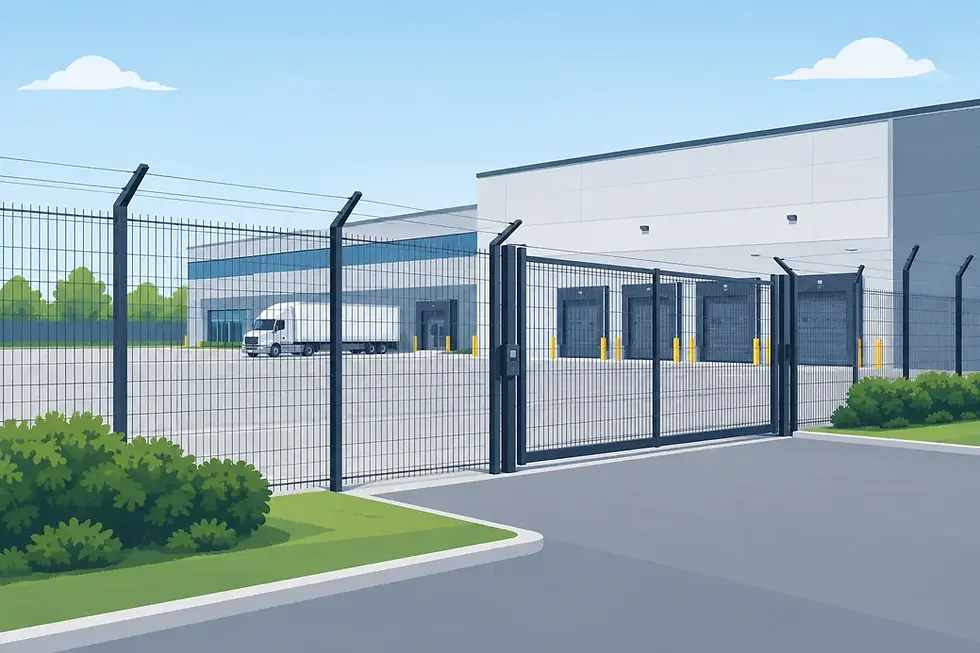
At the primary entrance, a wide double gate allows maintenance vehicles, snow removal equipment, and emergency responders to enter when needed. A separate pedestrian gate near the main office gives staff a clear point for visitor access. Along the playground, self-closing and self-latching gates help prevent children from wandering into parking or traffic areas. If the school shares a field with community groups, another controlled gate can provide after-hours access without opening the entire campus.
That is the value of a thoughtful school perimeter fence plan: each opening has a purpose, and each section of fence supports how the grounds are actually used.
Start With Traffic, Not Just Fence Height
Fence height matters, but access planning often has a bigger effect on day-to-day safety. Before choosing materials, map how people and vehicles move through the property. Look at morning drop-off, bus lanes, parent parking, staff parking, delivery routes, recess areas, and field access.
A fence that blocks a common walking route can create problems if there is no nearby pedestrian gate. A vehicle gate placed too close to a busy pickup zone can be inconvenient or unsafe. On the other hand, a properly located gate can reduce confusion and help staff direct visitors toward the school office.
For many sites, 4-foot fencing may be enough around low-risk boundaries or designated walkways. A 6-foot fence is a common choice for broader perimeter control, play areas, storage zones, and locations next to parking lots or public roads. Taller fencing may be appropriate around ball diamonds, courts, equipment compounds, or areas where objects regularly leave the play surface. The final height should always reflect the property’s needs and any local requirements.
Choosing Materials for a School Fence Perimeter
Chain link is the flagship choice for large school properties because it balances price, durability, and visibility. Staff can see through it, security cameras have clearer sightlines, and damaged sections can usually be repaired without replacing an entire fence run. Galvanized chain link offers dependable performance and a traditional look. Vinyl-coated chain link adds color options, including black, and gives high-visibility areas a cleaner finish.
Ornamental iron fencing is a strong option for front entrances, administrative areas, and campuses where curb appeal is a priority. It creates a more formal appearance while still allowing visibility. The trade-off is cost. For a large property, installing ornamental fencing around every boundary may not be the best use of the budget.
Vinyl or PVC fencing can provide privacy around service areas, dumpsters, utility equipment, or staff patios. It is generally not the first choice for a full school perimeter because it blocks sightlines and can cost more across long distances. Wood fencing may suit a small enclosed area, but it requires more maintenance than commercial chain link and may not be ideal for high-traffic institutional properties.
Many successful projects combine materials. A school can use ornamental iron at the front, black chain link along visible side streets, galvanized chain link on long rear boundaries, and privacy fencing around service zones. This keeps the design professional and functional while controlling overall project costs.
Gates Are Where the Plan Succeeds or Fails
A perimeter fence is only as useful as its gates. Schools need gates that are easy for authorized people to use but difficult to leave unsecured by accident. Pedestrian gates should be placed where staff can observe them when possible. Gates near playgrounds should have child-conscious latching hardware and dependable self-closing mechanisms.
Vehicle gates need enough width for service trucks, grounds equipment, and emergency access. Double swing gates are a practical option where there is room for gate leaves to open inward. Cantilever slide gates can work well at driveways where swing clearance is limited, although they require more room along the fence line and can add to the project cost.
Do not overlook gate hardware. Commercial hinges, latches, drop rods, and closers take more wear than residential hardware. A school gate may be opened dozens of times a day, especially at shared sports facilities. Investing in properly sized hardware helps reduce service calls and keeps operations moving.
Privacy Slats: Useful in the Right Places
Privacy slats can improve a school perimeter fence when they solve a specific problem. They may help screen a dumpster enclosure, maintenance yard, storage area, or neighboring property. Colored slats can also complement school colors and improve the appearance of a visible chain link fence.
However, privacy throughout the entire perimeter is not always the right answer. Full slats reduce visibility from both inside and outside the property. That can limit natural oversight and reduce the ability of staff or passersby to notice unusual activity. Slats also catch more wind, so the posts and framework need to be designed for the added load.
A balanced approach is usually better: use open fencing around main perimeter areas and reserve privacy materials for targeted sections that need screening.
Installation Details That Protect the Investment
A school fence should be built for heavy use, changing weather, and occasional impact. Proper post depth, concrete footings, framework sizing, tensioning, and gate alignment are not minor details. They determine whether the fence stays straight and usable over time.
The installation team should also account for slopes, drainage, existing landscaping, sidewalks, underground utilities, and snow storage areas. On a sloped site, a fence can follow the grade or be stepped in sections. Following the grade often looks cleaner, while stepped panels may be required when the terrain changes sharply. The right choice depends on the site and the need to control gaps below the fence.
For Calgary-area schools, freeze-thaw conditions make proper footing depth especially important. School grounds also need a plan for snow clearing. Placing fence lines too close to plow routes or snow piles can lead to repeated damage, even when the fence itself is built correctly.
Budgeting a School Perimeter Fence Project
Pricing depends on total footage, material type, fence height, number of gates, ground conditions, privacy additions, and site access. A long, straight run of galvanized chain link is generally more affordable per foot than ornamental iron, vinyl, or a layout with multiple custom gates. But the lowest initial price is not always the lowest long-term cost if the fence cannot handle daily use.
A clear estimate should separate the major decisions: fencing material, posts and framework, gates, privacy features, removal of old fencing if required, and installation. That makes it easier for school administrators, property managers, and contractors to compare options without guessing what is included.
Vallarta Fence Calgary can help schools and property managers plan cost-effective chain link, ornamental, vinyl, wood, and privacy fencing solutions with professional installation and clear all-in pricing for labor and materials.
Build for the Campus You Have
The strongest school perimeter fence example is not a one-size-fits-all design. A small school with one playground has different needs than a campus with sports fields, multiple parking areas, portable classrooms, and community access. Start with how the grounds function, select materials that fit the budget, and place gates where staff can manage them confidently. A professionally installed fence should make the property easier to operate every day, not create another problem for staff to solve.


Comments