


Chain Link vs Vinyl Fencing: Which Fits?

If you are comparing chain link vs vinyl fencing, you are probably trying to solve a real property problem, not just pick a look. Maybe you need to secure a yard without overspending, close off a commercial perimeter, add privacy around a home, or install a fence that can handle Calgary weather with minimal hassle. The right choice depends on what matters most on your site - budget, privacy, appearance, maintenance, or long-term durability.
For many buyers, the decision gets clearer once you stop treating both materials like they do the same job. They do not. Chain link and vinyl can both define a property line and improve security, but they perform very differently in day-to-day use. One is usually the practical value pick. The other is often chosen for privacy and a cleaner finished appearance.
Chain link vs vinyl fencing at a glance
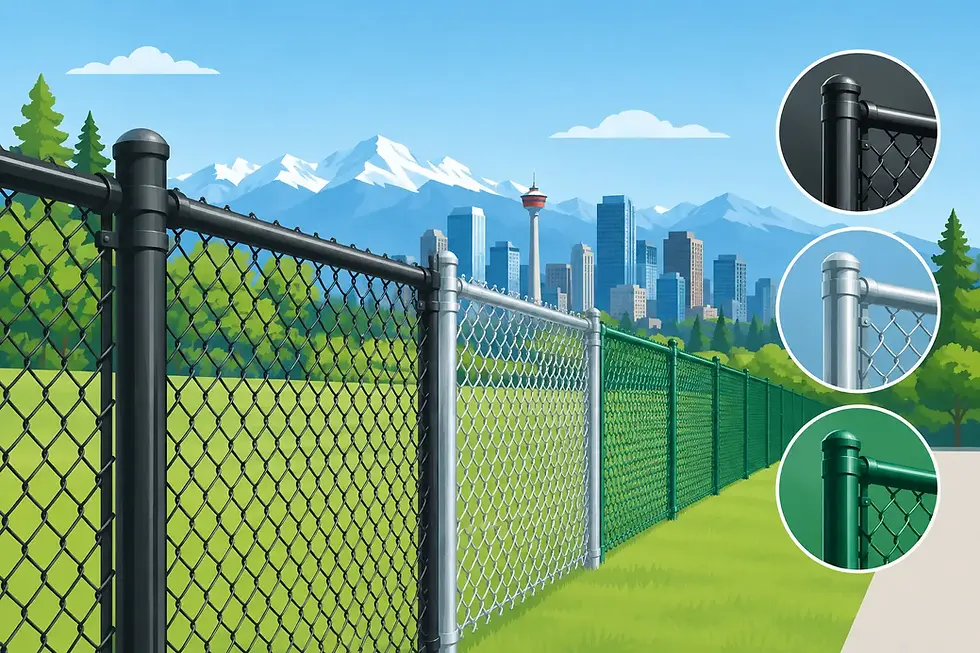
Chain link fencing is often the better fit when cost, strength, and function come first. It is widely used for backyards, dog runs, schools, warehouses, sports areas, and commercial sites because it is dependable, efficient to install, and cost-effective over large areas. It also works well when visibility matters, such as around businesses, storage yards, and shared boundaries.
Vinyl fencing is usually chosen when privacy and curb appeal are higher priorities. It gives a more finished look, comes in solid panel styles, and helps block views from neighbors or streets. For homeowners who want a low-maintenance fence with a more polished appearance, vinyl can be a strong option.
That said, there is no universal winner. A fence that works perfectly for a backyard pool area may not be the right answer for an acreage, loading yard, or dog enclosure.
Cost is often the deciding factor
If price is the first thing you are looking at, chain link usually has the advantage. Material and installation costs are typically lower than vinyl, especially on larger projects. That matters when you are fencing a long property line, a business perimeter, a schoolyard, or any site where footage adds up quickly.
Chain link also gives you flexibility. You can choose different heights, wire gauges, and additions like privacy slats or custom gates without pushing the project cost as high as a full vinyl privacy fence in many cases. For buyers who want practical security and clear value for money, that makes chain link hard to beat.
Vinyl usually costs more upfront. The panels, posts, and installation process tend to come at a higher price point. For some property owners, that added cost is worth it because they want privacy, a certain look, or a fence that matches the style of the home. But if your priority is covering a lot of ground at a competitive price, chain link is often the smarter investment.
Privacy and appearance tell a different story
This is where vinyl often pulls ahead. A solid vinyl fence creates separation. It blocks sightlines, reduces the open feel of a yard, and gives residential properties a cleaner, more enclosed appearance. If you want backyard privacy for kids, pets, outdoor seating, or a hot tub area, vinyl does that job better than standard chain link.
Chain link is more open by design. It clearly marks the boundary and secures the area, but it does not hide what is behind it. For many commercial and industrial properties, that is actually a benefit. Visibility can improve monitoring, safety, and overall site awareness. On a residential property, though, some homeowners prefer more screening.
There is a middle ground. Chain link can be upgraded with privacy slats to add partial visual coverage. That will not create the same solid appearance as vinyl panels, but it can improve privacy while keeping the lower-cost, durable structure of chain link. If you want privacy without committing to full vinyl pricing, that option is worth considering.
Durability depends on the kind of wear your fence will face
Both materials are durable, but they hold up differently.
Chain link is known for its toughness. It handles impact well, which is one reason it is used so often in commercial, industrial, and high-traffic environments. Around dog runs, equipment yards, schools, and active family properties, chain link tends to perform reliably. It is not easily cracked, and if a section is damaged, repairs are often more straightforward than replacing large fence panels.
Vinyl resists rot, insect damage, and many of the maintenance issues associated with traditional wood fencing. It does not need painting, and it keeps a clean appearance for a long time. But it can be more vulnerable to cracking under heavy impact or extreme force, depending on the product and conditions. If your property sees rough use, repeated contact, or heavy traffic near the fence line, that is something to factor into the decision.
In a climate with freeze-thaw cycles, wind, and seasonal weather changes, installation quality matters just as much as the material itself. A properly installed fence with the right post setting and layout will always perform better than a cheaper installation that cuts corners.
Maintenance is low for both, but not identical
One reason both chain link and vinyl remain popular is that neither demands the level of upkeep you would expect from wood. Still, they are low maintenance in different ways.
Chain link is simple and practical. It generally needs little beyond occasional inspection and cleaning. Galvanized or coated chain link is built for outdoor use, and it is a reliable option when you want a fence that does its job without much attention.
Vinyl is also low maintenance and appeals to buyers who want a cleaner finished look without repainting or staining. A rinse or wash now and then usually keeps it looking good. For homeowners focused on appearance as much as function, this is a major selling point.
If your priority is pure function with minimal fuss, chain link is often enough. If your priority is keeping a polished residential look with limited maintenance, vinyl may feel more satisfying over time.
Best uses for each fence type
When chain link fencing makes more sense
Chain link is often the best fit for practical projects where security, visibility, and value matter most. That includes commercial lots, industrial yards, schools, dog runs, side yards, sports spaces, and large residential boundaries. It also makes sense for buyers who want dependable performance at a more affordable installed cost.
For acreages and oversized properties, chain link is especially attractive because it can cover longer distances without pushing the budget too far. If you need a gate system, controlled access, or a fence that serves more of a working purpose than a decorative one, chain link usually delivers better value.
When vinyl fencing makes more sense
Vinyl is often the better choice for residential settings where visual appeal and privacy are the main goals. Backyard enclosures, pool-adjacent spaces, family yards, and front-facing sections of a property can all benefit from the cleaner look of vinyl. It is also appealing to owners who want a more finished style without taking on regular repainting or surface upkeep.
If your fence is part of a home improvement plan rather than just a perimeter barrier, vinyl often fits that goal better.
Chain link vs vinyl fencing for resale and long-term value
Long-term value is not only about the lowest upfront number. It is about how well the fence serves the property over time.
Chain link offers strong value because it is affordable, durable, and useful across many property types. For landlords, business owners, and buyers managing larger sites, that practical return is hard to ignore. You get security and boundary control without overspending.
Vinyl can add perceived value in residential settings where appearance matters to future buyers. A private, attractive backyard fence may support curb appeal and make outdoor space feel more usable. But that extra value tends to matter more in home-focused projects than in commercial or industrial applications.
So if you are asking which one gives better long-term value, the honest answer is it depends on the property. For function-first buyers, chain link often wins. For privacy-first homeowners, vinyl can justify the added cost.
How to make the right call for your property
The fastest way to decide between chain link and vinyl is to start with the purpose of the fence. If you need affordable security, perimeter control, pet containment, or a durable fence for a larger area, chain link is usually the stronger choice. If you want privacy, a more decorative residential look, and a fence that visually upgrades the yard, vinyl may be worth the higher investment.
It also helps to think beyond the material itself. Fence height, gate placement, privacy needs, terrain, project size, and installation quality all affect the final result. A good quote should reflect the actual use of the property, not just a price per foot.
That is why many customers ask for side-by-side pricing before moving ahead. A clear estimate lets you compare real installed cost, not just material assumptions. For homeowners, property managers, and business owners who want a fence that fits both the site and the budget, that step saves time and prevents expensive guesswork.
At Vallarta Fence Calgary, we see this choice come up on everything from backyard projects to large commercial installations. The best fence is the one that solves the problem clearly, holds up well, and makes sense for your budget. If you are weighing chain link against vinyl, focus on how the fence needs to perform on your property first. The right answer usually becomes obvious from there.


Comments