


How to Choose Chain Link Fence Right

A chain link fence can look simple from the street, but the wrong choice shows up fast - weak wire, the wrong height, a gate that sags, or a layout that does not match how the property is actually used. If you are researching how to choose chain link fence for a home, business, school, dog run, or industrial site, the best place to start is not color or price alone. It is purpose.
The right fence depends on what you need it to do every day. For some properties, the main goal is basic boundary definition at an affordable price. For others, it is security, pet containment, traffic control, or a durable perimeter that can handle heavy use. A good fence choice balances function, appearance, durability, and installation cost so you get real value instead of a low price that becomes a future repair bill.
How to Choose Chain Link Fence for Your Property
Start by asking one practical question: what problem is the fence solving? A backyard fence for kids and dogs is a different project than a warehouse perimeter or a fenced school yard. When the use case is clear, the rest of the decisions get easier.
For residential properties, chain link is often chosen because it is cost-effective, long-lasting, and low maintenance. It keeps sightlines open, works well on side yards and backyards, and can be upgraded with privacy slats or custom gates. If curb appeal matters, black vinyl-coated chain link usually gives a cleaner and more finished look than standard galvanized wire.
For commercial and industrial properties, the decision usually leans more on security, traffic flow, and durability. Taller heights, stronger wire gauge, wider gate openings, and layout planning matter more here. A fence around a warehouse, contractor yard, or business facility has to do more than mark a line. It has to support operations.
This is why the cheapest quote is not always the best value. Material quality, post spacing, gate construction, and installation standards all affect how the fence performs over time.
Pick the Right Fence Height First
Height changes both function and price, so it is one of the most important decisions.
For many homes, 4-foot chain link works for front or side boundaries where you want a clear edge without making the property feel closed in. A 5-foot or 6-foot fence is more common for backyards, dogs, and added security. If your main concern is keeping larger pets in or reducing easy access from outside the yard, going taller usually makes sense.
Commercial and industrial sites often need 6-foot fencing as a starting point, and some projects require 8-foot or higher depending on the level of security and the property type. Schools, storage yards, and equipment compounds may also need specific configurations for safety and access control.
The trade-off is straightforward. More height gives you more control and security, but it also increases material and labor cost. It can also change the overall look of the property. That is why the best height is the one that matches the actual use, not just the biggest number available.
Wire Gauge Matters More Than Most Buyers Expect
If you want to know how to choose chain link fence that holds up well, pay close attention to wire gauge. This affects strength.
Lighter residential applications may use a lighter gauge, which helps keep costs down. That can be perfectly fine for a typical backyard with normal use. But for high-traffic areas, active pets, commercial perimeters, or places where the fence may take impact, a heavier gauge is usually the smarter investment.
This is one of those areas where it depends on the project. If the fence only needs to define a line and handle light use, you may not need to pay for a heavier specification. If the fence protects equipment, controls access, or needs to stand up to years of wear, stronger wire is worth it.
A professional estimate should make this clear rather than treating every property the same.
Choose Between Galvanized and Vinyl-Coated
Most chain link fencing comes in galvanized or vinyl-coated finishes. Both have a place.
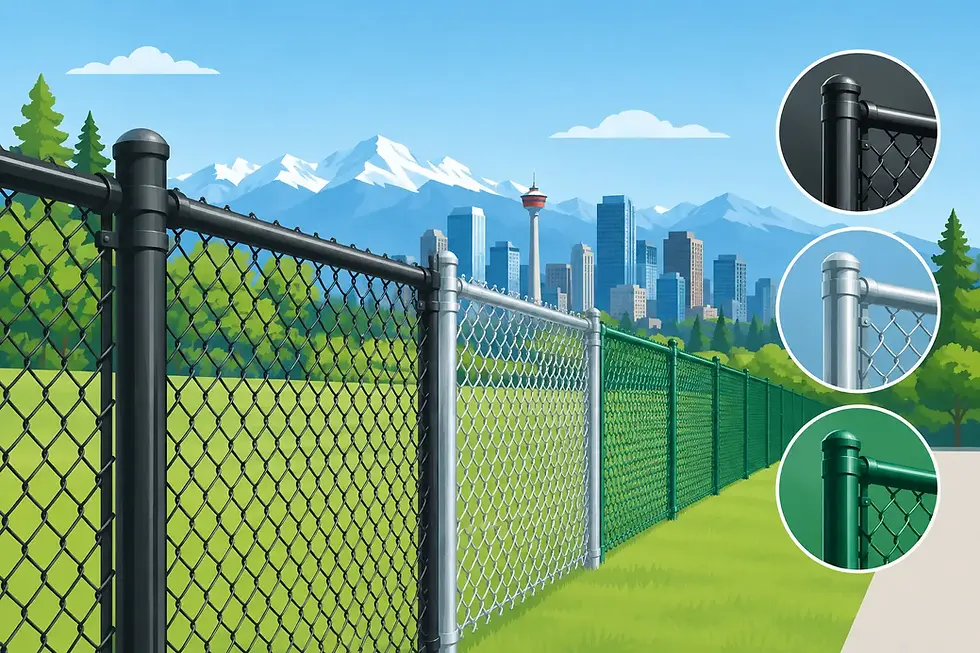
Galvanized chain link is the classic silver finish. It is practical, durable, and often the most budget-friendly option. For utility areas, commercial yards, and straightforward residential projects, it remains a strong choice because it keeps the project affordable without sacrificing performance.
Vinyl-coated chain link, especially black, is often preferred when appearance matters more. It blends into landscaping better, looks more polished, and tends to feel less industrial in residential settings. Many homeowners choose black chain link because it is easier on the eye and can improve the finished look of the yard.
The main trade-off is cost. Vinyl-coated fencing generally costs more than galvanized. If your priority is the lowest installed price, galvanized may be the better fit. If you want a cleaner appearance and are willing to invest a little more upfront, vinyl-coated is often worth it.
Think About Privacy and Visibility
One reason chain link remains popular is visibility. You can secure an area without fully blocking views, which is useful for homes, schools, dog runs, storage yards, and businesses that want a controlled perimeter without creating blind spots.
But open visibility is not always what the property needs. If you want more privacy, wind reduction, or a more finished look, privacy slats can be added. This is a practical upgrade for backyards, recreation areas, and commercial spaces where a little visual screening makes the fence more functional.
Still, slats are not the same as a fully private wood or vinyl fence. They improve screening, but they do not completely shut out sightlines in every situation. If full privacy is the top goal, another fence type may be the better choice. If you want affordability with some added coverage, chain link with slats can be a very good middle ground.
Do Not Treat Gates as an Afterthought
A lot of fence problems start at the gate. People focus on line posts and mesh, then realize too late that the gate opening is too narrow, poorly placed, or not built for the way the site operates.
For homes, the questions are simple but important. Do you need one walk gate or two? Should the gate be placed near the driveway, alley, or side entrance? Will lawn equipment, trailers, or large items need to pass through? A gate that is too small becomes a daily frustration.
For commercial and industrial properties, gate planning is even more important. Vehicle access, equipment movement, delivery clearance, and security all affect gate size and design. A custom gate may be the right answer if standard sizing does not fit the site.
Good chain link fence planning always includes gate use, not just gate location.
Match the Fence to the Ground Conditions
Not every property is flat, clean, and easy to fence. Slopes, uneven grades, tight access, and wide project areas all affect installation.
This matters because the same fence specification can perform differently depending on the site. A yard with slope may need stepped or adjusted sections. An acreage or large perimeter may require more planning around corners, access points, and post placement. A commercial site may need fencing that works around pavement, buildings, loading areas, or existing infrastructure.
That is why a property-specific quote matters. A reliable contractor should look at the actual site conditions, not just give a square-foot number over the phone and hope the rest works itself out.
Balance Price With Long-Term Value
Most buyers want an affordable fence, and that makes sense. Chain link is popular in part because it offers strong value for the money. But choosing based on the lowest number alone can lead to lighter materials, weaker gates, or installation shortcuts that cost more later.
A better approach is to ask what is included. Does the price cover labor and materials? Are gates part of the quote? Is the fence being customized to the property, or is it a one-size-fits-all estimate? Are you paying for a fence that meets your real needs, or just the cheapest version available?
For many property owners, the best value is a fence that is priced competitively, installed professionally, and built to match the site. That is where experience matters. Contractors who handle residential, commercial, and industrial projects usually have a better sense of what specification makes sense for each job.
At Vallarta Fence Calgary, that practical approach is a big part of the value - clear estimates, all-in pricing, and chain link options that can be customized for everything from backyards to large facilities.
When Chain Link Is the Right Choice
Chain link is often the right fit when you want durability, affordability, low maintenance, and flexible design options. It works especially well for homes with pets, rental properties, dog runs, schools, business perimeters, warehouses, and acreages where function matters just as much as appearance.
It may not be the best fit if complete privacy is the main goal or if the property calls for a more decorative look from the street. In those cases, wood, vinyl, or ornamental fencing may be worth comparing. But for buyers who want practical performance and strong value, chain link is hard to beat.
The best fence is not the one with the most features. It is the one that fits the property, the budget, and the way the space is used every day. If you start there, the right choice becomes a lot easier.


Comments