


Industrial Security Fencing That Works

A warehouse fence that looks fine on paper can fail fast in the field. Gates sag, access points create bottlenecks, and weak perimeter design leaves blind spots where they matter most. That is why industrial security fencing needs to do more than mark a property line. It needs to control access, hold up under daily use, and match the realities of your site.
For industrial properties, security is rarely just about keeping people out. It is also about directing traffic, protecting equipment, reducing liability, and helping operations run without constant workarounds. Whether you manage a warehouse, a contractor yard, a school facility, a storage lot, or a manufacturing site, the right fence should solve practical problems from day one.
What industrial security fencing needs to do
Industrial sites have different demands than a typical commercial property. There is usually more vehicle traffic, more wear on gates, more pressure on perimeter control, and less room for mistakes. A fence that works well around a small office lot may not be the right fit for a yard with delivery trucks, stored materials, and multiple access points.
Good industrial security fencing starts with the layout. You need to know where people enter, where vehicles move, where visibility matters, and where added deterrence makes sense. Fence height matters, but so do line posts, terminal posts, gate frames, footings, and how the whole system handles repeated use. A low-cost option can become expensive if it needs constant repairs or creates delays for staff and deliveries.
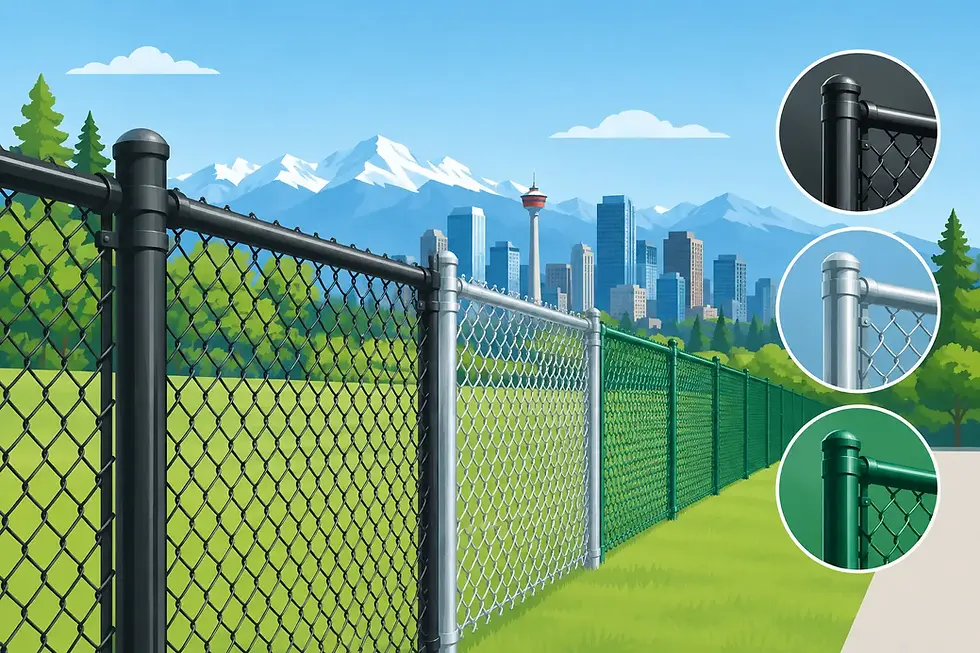
This is why chain link is often the first choice for industrial work. It is cost-effective, durable, and practical for large perimeters. It also adapts well to privacy slats, barbed wire where appropriate, and custom gate configurations. For many industrial buyers, it gives the best balance of security, speed of installation, and overall value.
Why chain link is a strong fit for industrial security fencing
Chain link remains the standard for a reason. It covers large areas efficiently, stands up well in demanding conditions, and gives property managers a straightforward way to secure a site without overspending. If your priority is perimeter control, clear boundaries, and dependable performance, it is hard to beat.
It also works across a wide range of properties. Warehouses, dog runs, equipment yards, schools, utility areas, and storage compounds all have different needs, but chain link can be configured for each one. Some sites need open visibility for monitoring. Others need privacy slats to reduce sightlines and improve site appearance. Some need wide swing gates or sliding gates for equipment access. The material stays flexible even when the job is complex.
That said, the right chain link system depends on the project. Height, gauge, post spacing, gate hardware, and privacy features should match the level of use and the level of risk. A fence around stored pallets is not the same as a fence around expensive equipment or a high-traffic loading yard. That is where proper planning matters.
Height, strength, and visibility
A taller fence usually adds deterrence, but height alone does not guarantee better performance. A six-foot fence may work for one property, while another needs a higher system with added security features. If the posts, fabric, and gate hardware are undersized, the fence can still become the weak point.
Visibility is another trade-off. Open chain link gives staff and cameras a clearer view of the perimeter, which can help with monitoring. Privacy slats reduce visibility into the site and can improve appearance, but they also change wind load and sightlines. The best choice depends on whether your site benefits more from visibility or screening.
Gates are often the deciding factor
On many industrial sites, gates take more abuse than the fence line itself. They open and close all day, handle heavy use, and need to align properly even after weather changes and ground movement. If gates are poorly designed or installed, they become a constant frustration.
That is why gate planning should never be an afterthought. The width has to fit your vehicles. The hardware has to match the frequency of use. The opening direction, latch style, and clearance all need to make sense for daily operations. A properly built custom gate can improve traffic flow and security at the same time.
Common industrial properties that need better perimeter control
Industrial security fencing is not limited to factories. A wide range of properties benefit from a stronger perimeter and better access control. In many cases, the fence is as much an operational tool as a security feature.
Warehouses often need fenced yards for loading areas, storage, and after-hours protection. Contractor yards need durable fencing that can handle equipment movement and changing material storage. Schools and institutional properties may need separation between public-facing areas and secured service zones. Acreages and large mixed-use sites often need long fence runs that stay cost-effective without sacrificing strength.
Each of these projects has different priorities. Some are focused on preventing unauthorized access. Others need to contain materials, define work zones, or create a safer environment for staff and visitors. The fence design should reflect that purpose instead of using a one-size-fits-all layout.
How to choose the right industrial security fencing system
The right system starts with a site-specific quote, not a generic price per foot. Two properties with the same perimeter length can have very different requirements based on grade changes, gate count, traffic patterns, and security expectations.
Start with the basics. What are you protecting? Who needs access? How often will the gates be used? Do you need open visibility, added privacy, or both in different sections? Once those questions are clear, the right material and layout become easier to define.
Budget matters too, and most buyers want a solution that keeps upfront costs under control without creating future problems. That is where experience pays off. A contractor who understands industrial projects can recommend where standard chain link works well and where upgrades are worth the cost. Not every site needs the most expensive setup. But every site does need a fence system that fits the job.
Installation quality matters more than many buyers expect
Industrial fencing is only as good as the installation behind it. Posts need proper depth and spacing. Gates need correct alignment. Corners, transitions, and terminal points need to be built for long-term stability. If the installation is rushed, even good materials can underperform.
Professional installation also helps avoid layout mistakes that affect operations later. A gate placed a few feet off can interfere with truck turning. A fence line that ignores drainage or grade can create maintenance issues. A clean installation protects your investment and saves time after the job is done.
Cost, value, and what buyers should expect
Price always matters, especially on larger industrial projects. But the cheapest quote is not always the best value if it leaves out key details, uses lighter materials, or fails to account for gate demands and site conditions. Clear pricing matters because it lets buyers compare real scope, not just a low number.
A practical quote should account for labor, materials, layout needs, and any custom features required for the property. That includes things like privacy slats, gate options, and adjustments for larger sites. When pricing is clear from the start, it is easier to make a confident decision and avoid surprises during installation.
For many property managers and business owners, the best result is a fence that does its job without becoming an ongoing issue. That means durable materials, professional workmanship, and a layout built around how the property actually operates. Vallarta Fence Calgary focuses on that kind of value - practical solutions, competitive pricing, and installation that fits the needs of the site.
Industrial security fencing should fit the way your site runs
The best fence is not just the strongest one or the tallest one. It is the one that supports your daily operations while improving security, access control, and peace of mind. On one site, that may mean long runs of chain link with wide vehicle gates. On another, it may mean privacy slats, controlled entry points, and a layout that separates public and restricted areas.
When the fence matches the property, everything works better. Traffic flows more smoothly, boundaries stay clear, and the site is easier to manage. If you are planning industrial security fencing, the smart move is to build around real use, real risks, and real value - not guesswork.


Comments