


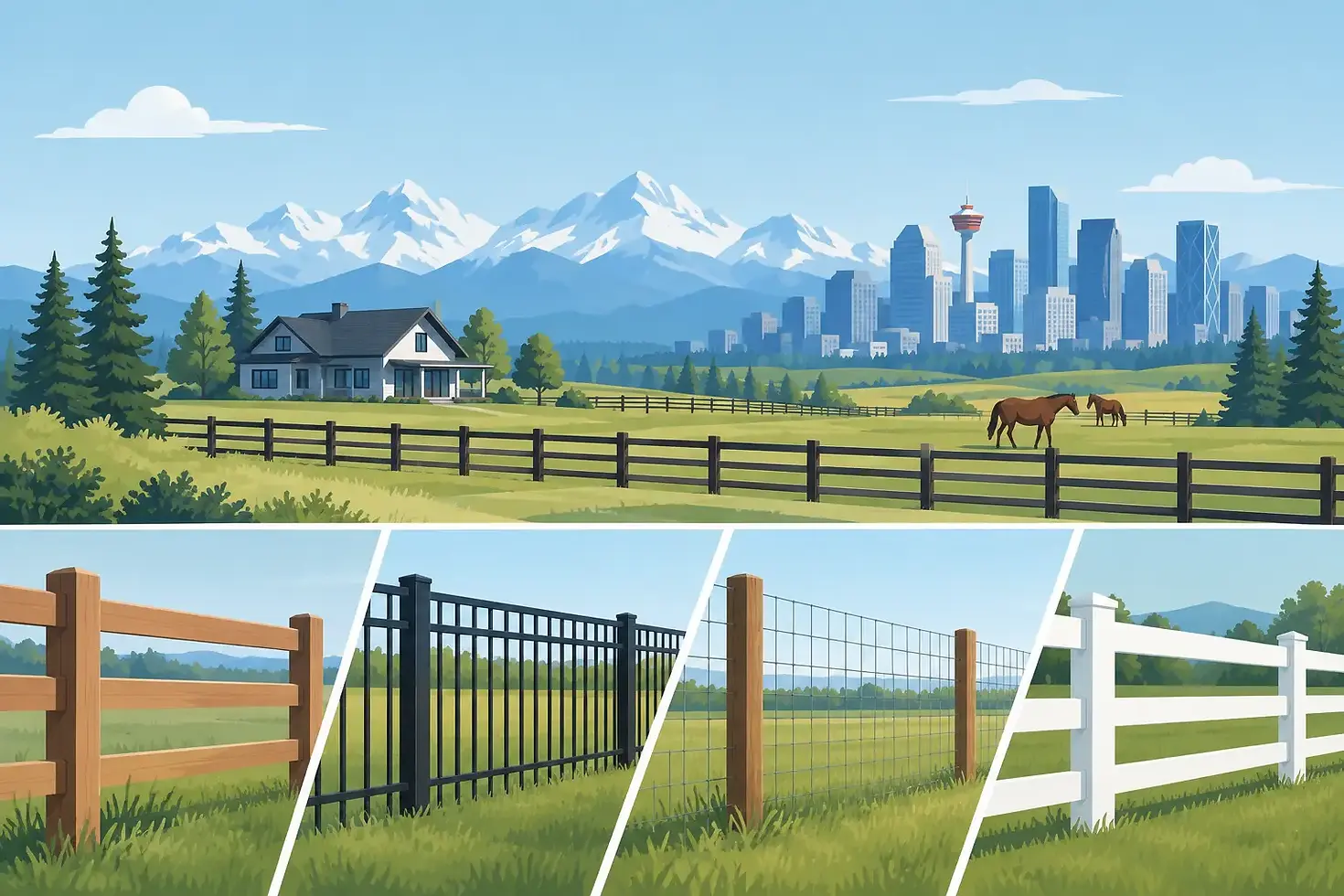
Acreage Fencing Options for Calgary Properties

Acreage fencing has to do more than mark where one property ends and another begins. On a larger parcel, the fence may need to contain animals, keep wildlife away from crops or gardens, secure equipment, guide visitors to the right entrance, and provide privacy around the home. A poorly planned fence can create expensive problems later, especially when gates, terrain, snow, and daily use have not been considered from the start.
For Calgary-area acreage owners, the right solution comes down to how the land is used, which areas need the most protection, and how much maintenance makes sense over time. A practical fence plan can combine different materials and gate styles rather than forcing one fence type around every part of the property.
Start With the Job Your Fence Must Do
Before selecting posts, mesh, rails, or panels, identify the purpose of each fenced area. A perimeter fence around a large rural property does not have the same requirements as a secure dog run, horse enclosure, driveway entrance, or private yard near the house.
Security-focused areas often need chain link fencing with strong posts, proper tension, and lockable gates. Livestock fencing needs appropriate height, spacing, and strength for the animals it will contain. Privacy areas may call for wood, vinyl, or privacy slats installed on a chain link framework. A decorative entrance can benefit from ornamental iron fencing and a custom gate that improves curb appeal without sacrificing access control.
This approach helps control project costs. Instead of paying for an upgraded material across every acre, you can invest in stronger or more attractive fencing where it matters most and use cost-effective options along long perimeter runs.
Why Chain Link Works for Acreage Fencing
Chain link remains one of the most practical choices for acreage fencing because it delivers dependable boundary control at a competitive price. It is available in different heights, gauges, coatings, and mesh sizes, making it adaptable for residential, agricultural, commercial, and industrial applications.
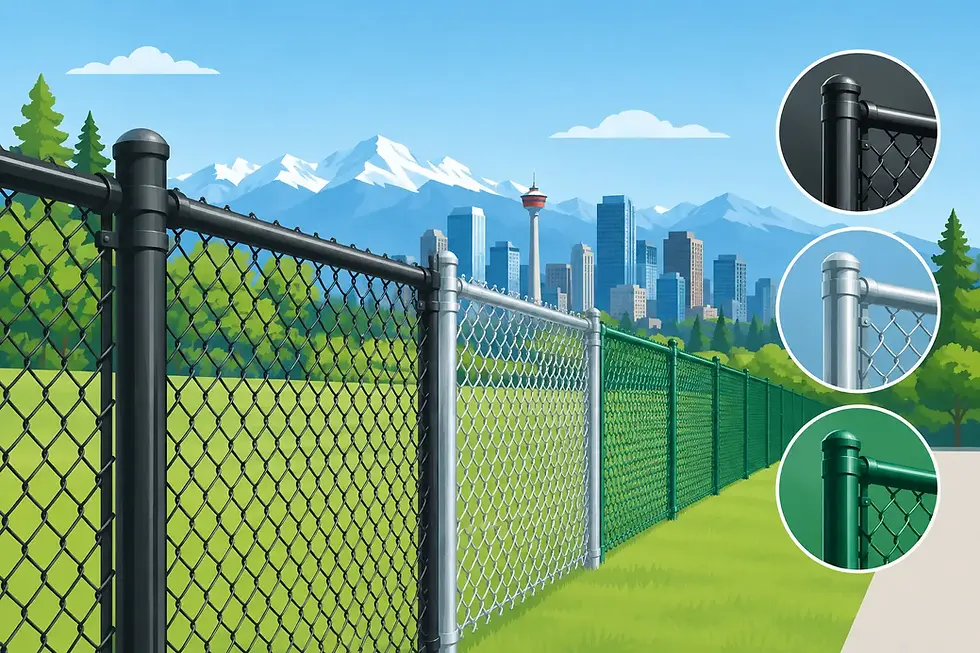
For many acreage owners, galvanized chain link provides a durable, straightforward solution for securing utility areas, dog runs, gardens, storage yards, and property boundaries. Vinyl-coated chain link offers a cleaner finished appearance and can blend more naturally into landscaped areas. Black chain link is especially popular near homes and wooded lots because it is less visually dominant than standard galvanized material.
The key is proper installation. Long fence lines need posts set at the right depth and spacing, correctly tensioned mesh, solid terminal posts, and bracing that can handle wind, snow loads, gate movement, and changing ground conditions. Saving money on inadequate posts or rushed installation can lead to sagging fabric, leaning sections, and gates that become difficult to operate.
Match Fence Height and Strength to the Site
Fence height should reflect the intended use, not just the look of the fence. A shorter fence may work around a front yard boundary or garden, while dog containment, deer deterrence, commercial storage, and larger animal areas can require substantially more height.
Strength matters just as much as height. Heavier-gauge chain link fabric and larger terminal posts are often worth the investment in high-use zones. Consider areas where animals may push against the fence, where equipment operates nearby, or where the fence line is exposed to strong wind. Corners, slopes, and gate openings also need additional attention because they carry more stress than straight runs.
If the property has rolling ground, drainage swales, or uneven grades, fencing should be planned around those conditions. Leaving large gaps under a fence can create an escape route for dogs and smaller animals. Forcing every panel or mesh section perfectly level can look awkward and increase installation complexity. An experienced contractor can recommend whether the fence should follow the grade, be stepped in sections, or use a combination of approaches.
Choose Gates for Daily Access, Not Just Appearance
Gates are one of the most used parts of any acreage fence, so they should be selected around real traffic patterns. Think about every vehicle that will need access: passenger vehicles, pickups with trailers, landscaping equipment, delivery trucks, livestock trailers, or service vehicles.
A narrow walk gate may be useful beside the home or garden, while a double swing gate can provide a wide opening for vehicles. Sliding gates are often a strong option where driveway space is limited or where a larger entry needs frequent use. Gate hardware, hinges, latches, drop rods, and posts should be matched to the gate’s weight and frequency of operation.
It is also smart to avoid placing a gate at the lowest point of a driveway or fence line. Snow buildup, mud, water runoff, and frost movement can affect clearance and make a gate harder to use. Planning the gate location before installation can prevent a frustrating access problem every winter.
Consider Privacy Around the Home Area
Most acreage owners do not need privacy fencing around the entire property. It is usually more effective to create a private outdoor zone around the house, patio, pool, hot tub, or backyard gathering space.
Wood fencing offers a traditional look and can be built in many styles. It works well when homeowners want a solid visual barrier and a natural finish. Vinyl fencing provides a clean, low-maintenance privacy option, while PVC fencing can be a practical choice for defined areas requiring a uniform appearance. Each material has trade-offs involving upfront cost, maintenance, wind exposure, and design flexibility.
Privacy slats are another useful option for chain link fencing. They can reduce visibility while keeping the durable structure and cost advantages of chain link. This option is often a good fit for service yards, equipment areas, dog runs, or side-yard screening where a full wood or vinyl fence is not necessary.
Plan for Livestock, Pets, and Wildlife Separately
An acreage may have several containment needs at once. Dogs need fencing without gaps or weak points near the ground. Horses, cattle, goats, and other livestock require material and spacing suited to their size and behavior. Wildlife management may require taller fencing or reinforced areas around gardens and vulnerable landscaping.
Do not assume one fence style works safely for every animal. For example, a fence that contains a large dog may not be appropriate for smaller animals that can pass through openings, and a light residential fence may not hold up where livestock regularly lean or rub against it. Discussing the animals, their habits, and the enclosure size before installation leads to a safer, longer-lasting result.
Build a Fence Plan That Controls Costs
The cost of acreage fencing depends on linear footage, material selection, terrain, post depth, gate requirements, removal of existing fencing, and site access. A long, open fence line is generally more straightforward than a property with heavy brush, steep grades, multiple corners, and several custom gates.
A clear estimate should account for labor and materials so there are fewer surprises once work begins. It should also identify upgrades that genuinely add value, such as stronger terminal posts, upgraded gate hardware, privacy slats, or a heavier fabric gauge in high-use areas.
For large projects, it can make sense to phase the work. Secure the most important areas first, such as the driveway, dog enclosure, storage yard, or livestock zone. Then complete less urgent boundary sections as budget and timing allow. This gives the property immediate function without compromising the long-term plan.
Work With an Installer Who Understands Large Properties
Acreage projects require more planning than a typical city backyard fence. The installer should be prepared to assess access, grades, soil conditions, existing structures, property lines, and the intended use of every gate and enclosure.
Vallarta Fence Calgary provides fencing supply and professional installation for acreage properties, including chain link, wood, vinyl, ornamental iron, PVC fencing, privacy options, and custom gates. The goal is not to sell a single material for every situation. It is to provide a practical fence design that suits the property, performs reliably, and fits the budget.
The best time to request an estimate is before site work, landscaping, animal purchases, or driveway improvements limit access to the fence line. A well-planned fence gives an acreage clearer boundaries, safer spaces, and easier day-to-day use from the first gate opening onward.


Comments