


Fence Footing Guide for Strong, Straight Posts

A fence can look excellent on installation day and still fail early if the posts are set wrong. This fence footing guide explains what holds a fence in place: proper depth, suitable footing material, drainage, and installation methods matched to the property. Whether you need chain link around a commercial yard, a privacy fence for a home, or a secure enclosure for a dog run, the footing is where long-term performance starts.
In Calgary-area conditions, frost, wind, changing soil moisture, and heavy gate use can put real pressure on posts. Saving a little on holes, concrete, or layout can lead to leaning fence lines, lifted posts, cracked footings, and costly repairs. A properly planned installation protects your budget by helping the fence stay straight and secure for years.
Why Fence Footings Matter
A fence post is more than a vertical support. It transfers wind force, fence weight, gate movement, and accidental impacts into the ground. The footing needs to resist those forces without shifting, heaving, or loosening over time.
The right footing depends on the fence material and the job site. A short section of residential chain link fencing has different requirements than a tall privacy fence, ornamental iron perimeter, warehouse enclosure, or double swing gate. Fence height, post spacing, soil type, exposure to wind, and local frost conditions all affect the final design.
For most projects, the goal is simple: set posts deep enough to resist movement, keep the post plumb, provide adequate support around it, and manage water at the base of the hole. The details are what separate a clean, durable installation from one that starts moving after its first hard winter.
Fence Footing Guide: Start With Depth and Diameter
Depth is one of the most important decisions in any fence installation. As a practical rule, posts are often buried around one-third of their overall length. A 6-foot fence commonly needs posts long enough to allow for substantial embedment below grade, not just the visible fence height.
Local frost depth matters as much as the one-third rule. In cold-weather regions, shallow footings can move as frozen soil expands and contracts. For a fence expected to withstand winter conditions, posts may need to extend below the frost line or be installed according to a footing plan designed for the site. This is particularly important for end posts, corner posts, and gate posts because they carry more load than line posts.
Hole diameter should also match the post and fence type. A wider hole gives the footing more surface area to resist lateral movement. Light chain link line posts need less concrete and diameter than a large wood privacy post or a commercial gate post. Oversizing every hole can waste material, while undersizing critical post holes can cause premature failure.
Before digging, identify underground utilities, sprinkler lines, drainage pipes, and private cables. Utility locating is not an optional step. It protects workers, avoids expensive damage, and helps prevent a project delay before the first post is installed.
The Posts That Need Extra Support
Line posts support the fence fabric or rails between terminal points. They matter, but they generally carry less stress than terminal posts. End posts, corner posts, brace posts, and gate posts need deeper or wider footings because they resist fence tension and directional force.
Gate posts deserve special attention. A pedestrian gate puts repeated side pressure on its hinge post. A driveway gate, especially a wide or heavy custom gate, increases that force significantly. If the gate post shifts even slightly, latches may stop aligning and the gate can sag. A stronger footing costs less than repeated adjustments later.
Choosing Concrete, Gravel, or Compacted Backfill
There is no single footing material that is correct for every fence. The best choice depends on the post type, fence style, soil, drainage, and expected loads.
Concrete is commonly used for wood, vinyl, ornamental iron, and chain link posts where added stability is needed. It is particularly useful for corner, end, and gate posts. Concrete should be installed with care, however. A poorly shaped concrete footing can hold water against a wood post or create conditions that encourage frost movement.
Gravel at the bottom of a post hole can improve drainage and provide a firm bearing surface. For many installations, a compacted gravel base is placed first, followed by the post and concrete or carefully compacted fill. The exact approach depends on site conditions and the fence system being installed.
Compacted native soil or granular backfill may be suitable for certain light-duty posts and soils that drain well. It is not the best answer for every project, especially where heavy wind, high fence panels, gates, or soft ground are involved. The material has to be compacted in layers, not simply pushed into the hole around the post.
Wood posts require another consideration: moisture. Concrete can provide strength, but the top of the footing should shed water away from the post rather than form a bowl that traps it. Proper grading and drainage are key to reducing rot risk at ground level.
Match the Footing to Your Fence Type
Chain link fencing is a practical choice for homes, schools, dog runs, warehouses, and industrial properties because it is durable, visible, and cost-effective. Its terminal posts must resist the tension created when fabric is stretched. Properly braced corner and end assemblies are just as important as the concrete below them. Without the right footing and bracing, the fabric can loosen and the fence line can pull out of alignment.
Wood privacy fencing catches more wind than open chain link. Wide panels create a broad surface that acts like a sail during strong gusts. That usually calls for appropriately sized posts, sufficient embedment, and careful attention to post spacing. On exposed properties, using stronger posts and a footing plan built for wind load is often money well spent.
Vinyl fencing needs accurately spaced and plumb posts because its rails and panels fit into a defined system. A post that moves or leans can create visible gaps and make panels difficult to seat correctly. Ornamental iron fencing also depends on precise footing alignment to keep panels level and maintain a professional appearance.
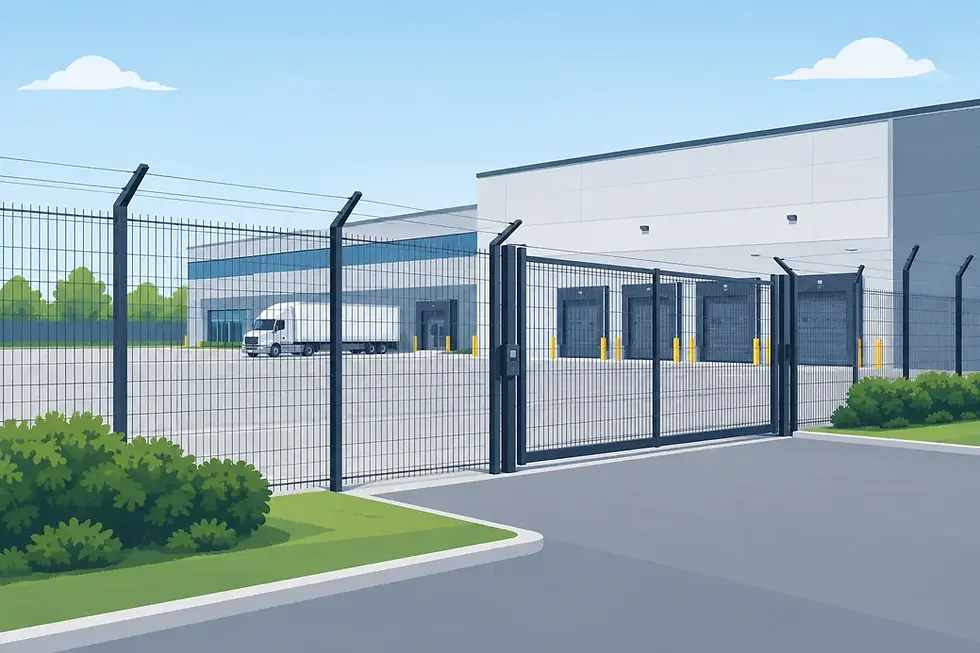
For commercial and industrial fencing, site use should guide the design. A perimeter fence beside vehicle traffic, a secured storage yard, or a school property may need heavier posts, deeper footings, and stronger gate foundations than a typical backyard project. The fence should be designed around how the property actually operates, not only around the length of the fence line.
Layout and Drainage Prevent Common Problems
A strong footing cannot fix poor layout. Posts must be set in a straight line, at the correct spacing, and plumb in both directions before the footing cures or backfill is fully compacted. Small errors at one post can become obvious across a long run of fencing.
Drainage is equally important. Water that pools around posts can soften soil, accelerate wood deterioration, and contribute to frost heave. Grade the area so water moves away from the fence where possible. On sloped properties, the layout may need stepped panels, racked fencing, or adjusted post heights to keep the fence secure while following the terrain.
Avoid setting posts in standing water or disturbed, loose soil without addressing the cause. Sometimes the right solution is a deeper hole, a gravel base, improved drainage, or a different fence design. There is no benefit in installing a premium fence on a weak foundation.
When Professional Installation Is Worth It
A do-it-yourself fence can work for a short, simple run in favorable ground. The risk increases when a project includes slopes, poor drainage, heavy gates, commercial security needs, frost-prone soil, or long stretches that must stay perfectly aligned. Equipment, post-setting experience, and material knowledge make a measurable difference on these jobs.
A professional installer can assess soil conditions, determine where extra support is required, build proper bracing, and provide a clear estimate that accounts for labor and materials. That helps property owners avoid unexpected costs caused by underestimating hole depth, concrete quantities, gate hardware, or site preparation.
For homeowners, contractors, and property managers who want a fence built around the property rather than a one-size-fits-all plan, Vallarta Fence Calgary can provide practical recommendations and a free estimate. A good fence starts below ground, and the right footing plan gives every panel, post, and gate a better chance to perform as intended.


Comments