


Industrial Fence Installation Calgary Guide

When a warehouse yard, equipment lot, school site, or industrial facility needs fencing, the real question is not whether to install one. It is what kind of industrial fence installation Calgary property owners can count on for security, durability, and long-term value without overpaying.
Industrial fencing has to do more than mark a boundary. It has to control access, hold up in Calgary weather, reduce maintenance headaches, and match the way the site actually operates every day. A fence that works well for a dog run or private yard may not be the right fit for a storage yard, distribution center, acreage, or contractor facility.
What industrial fence installation in Calgary should accomplish
A good industrial fence starts with function. Some properties need perimeter security to discourage trespassing and theft. Others need controlled access for staff, deliveries, or vehicles. In many cases, the fence also has to support safety goals by separating the public from active work areas, machinery, or inventory.
That is why industrial projects are rarely one-size-fits-all. Height, wire gauge, post spacing, gate width, privacy needs, and overall layout all depend on the site. A basic chain link perimeter may be enough for one property, while another needs privacy slats, barbed wire, custom gates, or reinforced areas around entry points.
For most industrial clients, the best installation balances three things: security, budget, and maintenance. If you overspend on features you do not need, the project stops making sense. If you go too light on materials, the fence may not perform the way you need it to.
Why chain link is the top choice for industrial fence installation Calgary projects
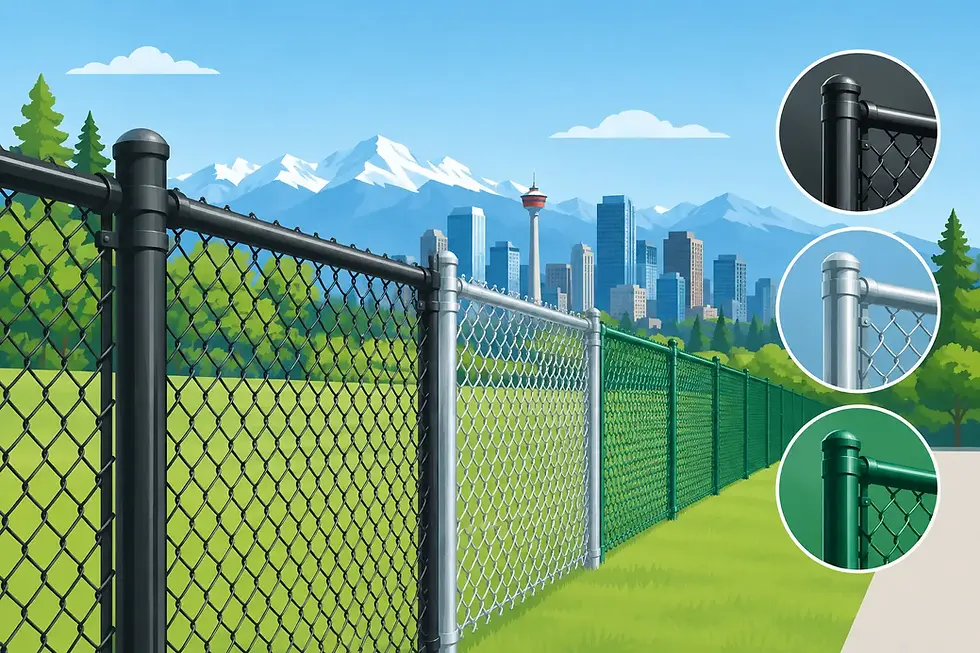
Chain link is often the first recommendation for industrial fence installation Calgary businesses request because it covers the basics better than almost any other option. It is cost-effective, fast to install on large perimeters, and strong enough for many commercial and industrial settings.
It also gives property owners flexibility. Chain link can be built at different heights, fitted with privacy slats, paired with vehicle and pedestrian gates, and adapted for warehouses, school grounds, dog runs, service yards, and business facilities. For large properties, that matters. The material needs to scale without sending the total project cost out of range.
Another advantage is visibility. On many industrial sites, being able to see through the fence is a benefit, not a drawback. Staff can monitor the perimeter more easily, and the property feels more controlled without creating blind spots. If privacy is a concern, slats can be added where needed instead of closing off the entire site.
That said, chain link is not always the perfect answer. If appearance is a major priority or the property needs a more decorative front-facing section, ornamental iron, vinyl, or custom combinations may be worth considering. The right approach depends on the site, the users, and the level of exposure to the public.
Choosing the right fence material for the property
The best industrial fence is the one that fits the job. Chain link is the leading option because it delivers strong value, but it is not the only one available.
For practical perimeter control, chain link remains hard to beat. It is especially effective for warehouses, logistics spaces, storage compounds, and industrial yards where durability and affordability matter most. If the property needs more visual screening, privacy slats can improve coverage without replacing the entire fencing system.
Ornamental iron can work well where appearance matters alongside security, such as office-front industrial buildings, institutional properties, or mixed-use commercial sites. It offers a stronger visual impression, but it usually comes at a higher price point than chain link.
Vinyl and PVC are less common for heavy industrial perimeters, but they may fit select sections of a property where privacy and clean appearance are the goal. Wood is usually chosen for residential or light commercial uses rather than industrial security, though it can still be part of a custom layout on certain mixed-use properties.
This is where a site-specific estimate matters. The material that looks cheapest on paper is not always the best long-term value once layout, gates, labor, and maintenance are factored in.
Gates, access points, and custom features matter more than most buyers expect
A perimeter fence is only as functional as its access points. On industrial sites, gates often do the heaviest work. They have to handle trucks, employee traffic, deliveries, service entry, and sometimes after-hours access.
That is why gate planning should happen at the start of the project, not after the fence line is already mapped out. A gate that is too narrow, poorly placed, or built without considering turning radius can create daily frustration. On busy sites, that becomes an operations problem, not just a fence problem.
Custom gates are often the difference between a fence that simply surrounds a property and one that actually supports how the site runs. Sliding gates, swing gates, double-drive gates, and pedestrian access points all have a place depending on the traffic pattern. In some cases, a simple chain link fence with well-planned custom access delivers better results than a more expensive system with poor layout.
Privacy slats are another feature worth considering. They can reduce visibility into storage areas, improve site appearance, and add a more finished look without the full cost of a solid privacy fence. They are especially useful where inventory, equipment, or waste areas should be screened from public view.
What affects pricing on industrial fence projects
Most buyers want the same thing from the start: clear pricing that makes sense. The challenge is that industrial fencing costs can vary a lot depending on property size and job requirements.
Linear footage is a major factor, but it is not the only one. Height changes, corner counts, terrain, post requirements, gate quantity, site access, tear-out of existing fencing, and customization all affect the final number. A flat, open site with a straightforward chain link perimeter is very different from a facility that needs multiple custom gates, privacy sections, and reinforced security features.
Material choice also changes the budget quickly. Chain link is usually the most affordable path for larger industrial projects, which is one reason it remains the flagship choice for many contractors and property owners. If you move into ornamental iron or highly customized layouts, the price naturally increases.
This is why all-in pricing has real value. When labor and materials are included in one estimate, it is easier to compare options honestly and avoid surprises later. For property managers and business owners, that kind of clarity helps speed up approvals and keeps the project moving.
How to choose the right contractor for industrial fence installation Calgary work
Industrial fencing is not just about selling material. It is about planning the right solution and installing it properly. Large-scale projects, active business sites, and institutional properties need a contractor that can handle both supply and installation with a clear process.
Experience matters because industrial work has more variables than a simple backyard fence. The contractor should be comfortable with large perimeters, custom gate configurations, different fence materials, and properties with real operational demands. They should also be able to explain what makes sense for your site without pushing unnecessary upgrades.
Look for straightforward estimates, practical recommendations, and a clear understanding of how the property will use the fence. A dependable contractor should be able to speak confidently about project categories ranging from schools and dog runs to warehouses, acreages, and business facilities. That range matters because it shows they can adapt the design to the job instead of forcing every customer into the same package.
It also helps to work with a company that offers product variety. Even if chain link is the right primary solution, there may be areas where ornamental sections, vinyl panels, or privacy features improve the final result. One supplier-installer that can handle the full scope usually makes the process easier.
A practical approach to getting the project right
The best industrial fence projects start with a clear look at the site. What needs to be protected? Who needs access? Where are the pressure points? How visible should the property be from the outside? These answers shape the right recommendation much faster than comparing fence styles in the abstract.
For many clients, the most efficient path is a professional quote based on the actual property layout and intended use. That gives you real numbers, realistic material options, and a fence plan that fits your goals instead of a generic guess. Companies like Vallarta Fence Calgary focus on that kind of practical, value-driven approach by combining competitive pricing, material options, and professional installation for projects of all sizes.
If you are planning industrial fencing for a warehouse, yard, school, acreage, or commercial facility, a well-designed fence should do its job every day without becoming a constant expense or problem. The right quote will show you where to save, where to upgrade, and how to build a fence that works as hard as your property does.


Comments