


Commercial Chain Link Fencing That Works

When a property needs security without blowing the budget, commercial chain link fencing is usually the first option worth pricing. It works for warehouses, schools, parking lots, dog runs, storage yards, and business facilities because it gives you a strong perimeter, clear visibility, and fast installation at a practical cost.
That matters when you are managing more than appearance. You may need to control access, protect equipment, separate traffic, define tenant areas, or meet site safety requirements. A fence that looks good on paper but slows down operations or costs too much to maintain is not a smart buy. Chain link remains one of the most reliable choices because it solves real property problems without adding unnecessary complexity.
Why commercial chain link fencing stays in demand
For many commercial and industrial properties, the job is straightforward. You need a fence that is durable, affordable, and easy to adapt to the site. Chain link checks those boxes better than most materials.
It handles large perimeters well, which is a major reason businesses and institutions keep choosing it. If you are fencing a warehouse yard, school boundary, construction staging area, or acreage section, material cost matters. Chain link gives you broad coverage without the premium price that often comes with ornamental or specialty products.
It also gives you visibility. That can be a big advantage for security, especially where staff need to monitor the perimeter, cameras need a clear line of sight, or you want to discourage hiding spots near the fence line. On some properties, privacy is the priority. On others, visibility is what makes the fence more useful. That is why the right design depends on how the site operates day to day.
Where this fencing works best
Commercial chain link fencing is a practical fit for a wide range of sites. Businesses often use it around loading areas, equipment storage, parking lots, service yards, and dumpster enclosures. Property managers use it to separate spaces, protect shared areas, and create defined boundaries that are easy to maintain.
Schools and institutional properties often need a balance between security and openness. Chain link can help secure playgrounds, sports areas, and perimeters while still allowing visibility for supervision. Dog runs and recreational spaces benefit from the same basic advantage - strong enclosure with clear sightlines.
Industrial properties usually need more from a fence than a simple boundary. They may need heavier framework, controlled entry points, and added height for better perimeter security. The good news is that chain link can be customized for that kind of use instead of forcing every property into the same basic design.
Choosing the right setup for your property
Not all chain link fences are built the same, and that is where many buyers make the wrong comparison. Two estimates may both say chain link, but the actual value can be very different depending on gauge, height, framework, gate layout, and site conditions.
Fence height is one of the first decisions. A lower fence may be fine for a light-duty boundary or dog run, while a warehouse or commercial yard may need a taller perimeter for better control and deterrence. If unauthorized access is a concern, height matters. If the main goal is simply defining a space, a lower profile may be enough and more cost-effective.
Framework strength matters too. Posts, rails, and fittings affect how the fence performs over time, especially in high-use or exposed areas. A busy commercial site with gates opening constantly and vehicles moving nearby needs a stronger overall build than a low-traffic enclosure.
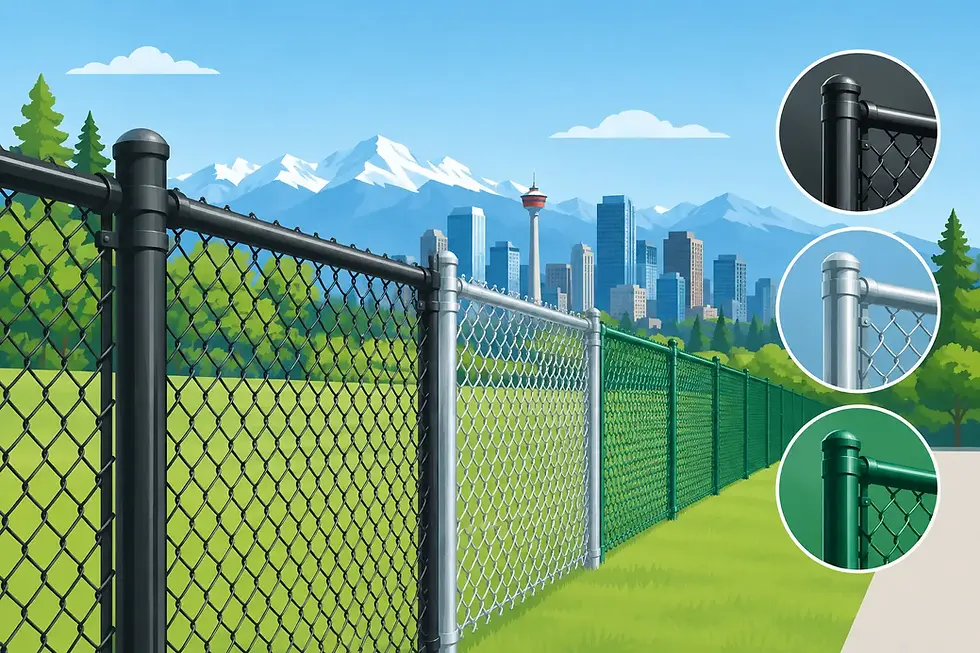
Then there are the finish and appearance options. Galvanized chain link is a popular choice because it is durable and cost-effective. For properties where appearance matters more, vinyl-coated chain link offers a cleaner look while still keeping the practical advantages of the material. Black chain link, in particular, is often chosen for schools, sports areas, and commercial properties where owners want a more polished finish.
Gates and access control make or break the project
A fence is only as useful as its access points. This is especially true on commercial sites where staff, tenants, delivery drivers, and service vehicles all need to move through the property without delays.
That is why gate planning should never be an afterthought. A simple swing gate may work well for pedestrian access or smaller service areas. Double swing gates can be the right fit for wider vehicle entry. Sliding gates are often preferred where space is limited or where the site layout makes swing clearance a problem.
The right answer depends on traffic flow, not just price. A cheaper gate option can become frustrating fast if it slows down daily operations or creates maintenance issues. Good commercial fencing should support how the site functions, not force everyone to work around it.
Privacy and customization options
One reason chain link works for so many different properties is that it can be customized without turning into a high-cost specialty project. Privacy slats are a common upgrade when visibility is no longer the goal. They help screen storage areas, separate commercial spaces, and reduce the direct view into yards or service zones.
This is useful for businesses that want a cleaner presentation to customers or better separation from neighboring properties. It can also help on school sites, recreational spaces, and multi-use facilities where privacy is needed in specific sections but not across the whole perimeter.
Custom layouts are just as important. Some projects need simple straight runs. Others involve corners, grade changes, multiple gates, enclosure sections, or integration with existing fencing. A contractor who handles both supply and installation can usually spot those details early and price them properly, which helps avoid surprises later.
What affects cost
Most buyers want the same thing at the start - a fence that does the job at a fair price. That is exactly why clear estimating matters.
Commercial chain link fencing is generally one of the most cost-effective fencing options, but pricing still depends on the specifics of the project. Height, total linear footage, gate quantity, material type, site access, ground conditions, and removal of old fencing all affect the final number. A flat, open site is different from a tight commercial lot with existing obstacles or difficult grading.
This is where all-in pricing is valuable. It is easier to compare proposals when labor and materials are clearly included instead of split into vague line items that leave room for confusion. A free estimate should help you understand what you are getting, what options are available, and where it makes sense to spend more or less based on the property.
Lowest price alone is not always the best value. If lighter materials, weak posts, or poorly planned gates create future repairs, downtime, or replacement costs, the cheaper quote stops being cheaper. Good value comes from matching the fence to the site and installing it properly the first time.
Why professional installation matters
On a commercial project, installation quality is not cosmetic. It affects security, function, and lifespan. Poor alignment, weak footings, improper gate setup, or rushed framework installation can lead to sagging, shifting, and avoidable service calls.
That is why experienced installation matters, especially on larger properties or sites with specific operating demands. Commercial fencing has to account for traffic, use patterns, grade changes, and long-term wear. A professional crew can identify the details that affect performance before they become expensive problems.
For buyers who want a straightforward process, working with a contractor that can quote, supply, customize, and install the fence is usually the most efficient path. It keeps communication simpler and reduces the risk of disconnects between material selection and field installation. Vallarta Fence Calgary focuses on that practical approach, helping customers move from quote to completed project without unnecessary delays.
A smart fit for businesses that need results
Commercial chain link fencing is not the flashiest option, but that is part of its strength. It is practical, durable, scalable, and adaptable to a wide range of properties. Whether you need to secure a warehouse, enclose a dog run, protect school grounds, or define a business perimeter, it gives you a dependable solution without overcomplicating the project.
The best fence is the one that fits your property, your daily use, and your budget. If you are planning a commercial fencing project, the smartest next step is to get a clear quote based on your actual site conditions and goals. A well-planned fence should make the property easier to manage from day one.


Comments